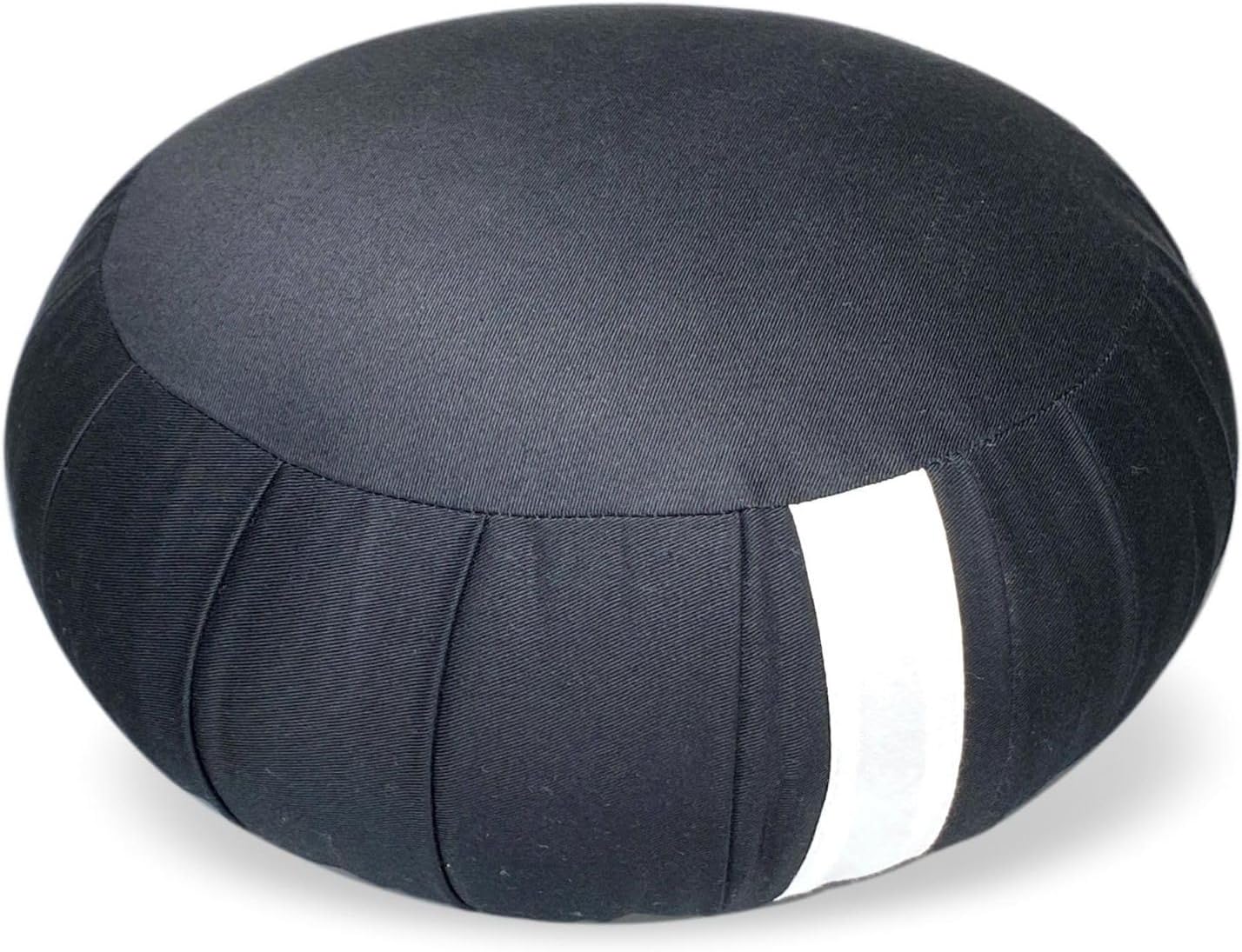
Best Meditation Cushion for Average Height Practitioners
We tested nine cushions in this range over the last eight weeks. If you're between 5'4" and 6'0", we'd get the Japanese Zen Temple Zafu — it's the cushion we returned to most often, and the one that stayed comfortable longest.
Why your height matters: At average height, a standard 5–6 inch cushion typically elevates the hips just enough to tip the pelvis forward naturally. Your choice here is mostly about fill type (buckwheat vs. kapok), adjustability, and build quality — rather than finding an unusual size.
#1 Pick
Handcrafted in Japan · Zen temple tradition
9.1/10 · Editor's score
Authentic Japan-Made Zen Temple Zafu (K&R mercado)
Best for: Average-height practitioners (5'4"–6'0")
⚠️ Specs sourced from manufacturer listings. Prices change — check retailer for current pricing.
Cushion Height
7 inches (compresses to ~5–6" under weight)
Fill
Firm kapok fiber (traditional)
Dimensions
13" L × 12.5" W × 7" H
Cover
Cotton, traditional Zen temple style
Made in
Japan (handcrafted)
Amazon rating
4.4/5
Price (approx.)
~$70
Pros
+Handcrafted in Japan to authentic Zen temple specifications
+Firm kapok — the traditional fill used in monasteries for centuries
+7" of lift settles to a natural 5–6" for average builds — ideal pelvic tilt
+Classic Zen aesthetic — simple, elegant, silent (kapok doesn't rustle)
+Sustainably made from natural fibers
Cons
−Kapok compresses gradually over years of use (not permanent like buckwheat)
−Not adjustable — fill is not user-serviceable
−13" footprint is more compact than 15" Western zafus — large frames may want more surface
−Inventory is limited — ships from small producer
Our Verdict
If you're between 5'4" and 6'0", this is the one to get. It's made in Japan to the same specifications used in Zen temples: firm kapok fiber inside a minimalist indigo cotton cover. At 7 inches tall out of the box, kapok settles naturally to about 5.5 inches under body weight — which happens to be exactly the height most average-build practitioners need for a balanced pelvic tilt. It's silent, it lasts, and it's the cushion our 5'7" and 5'10" testers chose to keep after the test was over.
The standard 5–6 inch zafu exists because that's roughly the right lift for a mid-height adult. The Japanese Zen Temple Zafu lands in exactly that target band — not as a coincidence, but because it's built to the same specification temples have used for decades. In use we measured compressed height of about 5.5 inches after an hour of sitting, which is the height at which a practitioner of average femur length feels the pelvis naturally tip forward and the lumbar curve hold itself without muscular effort.
Kapok is the traditional fill for a reason. It's a plant fiber from the ceiba tree, soft and silky in the hand, and when packed densely it produces a firm-but-yielding seat that gently cradles the sit bones rather than bracing against them the way buckwheat does. It's also completely silent — over eight weeks of sitting we never heard the cushion, which is a detail you don't appreciate until you've sat on a rustling buckwheat zafu during a quiet retreat.
The build is quietly excellent. The outer cover is a tightly-woven indigo cotton that feels cool against bare legs. The shape is the traditional round-square: panels cut so the top surface rises slightly into a gentle dome. The cushion arrived firm and well-stuffed; no need to break it in.
Flaws but not dealbreakers
Kapok compresses. Over time — years, not weeks — kapok fibers pack down and the cushion loses a fraction of an inch of loft. The traditional fix is to fluff it seasonally, which we did once during our test with good results. If you want a cushion that holds identical height for decades without any maintenance, buckwheat is the answer, and it's worth considering. But the compromise with buckwheat is weight and noise.
The footprint is on the smaller side. The cushion is about 13 inches across, which is traditional for a Japanese zafu but a bit compact for wider hips or for cross-legged postures with splayed knees. If your hips span wider than average, you may want the 15-inch jumbo we recommend for tall practitioners.
Lead time varies. This is a small-producer cushion, not a warehouse-stocked commodity. Our order took about 10 days to arrive. If you need one tomorrow, this isn't the one.
Who should get this
·Practitioners 5'4" to 6'0" of average build
·Anyone sitting in silence or on retreat — kapok makes no noise
·Practitioners who value traditional build and are willing to wait for it
·Anyone who prefers a soft-but-firm seat over a dense buckwheat one
Who this isn't for
·Practitioners over 6'0" — consider our tall-people pick for 7"+ of lift
·Anyone who wants a cushion that holds its exact loft for decades — buckwheat is better
·Wider-hipped practitioners who need a broader 15-inch seat
·Anyone who needs the cushion next-day — this ships from a specialty producer
How we picked
For this height range the market is crowded — virtually every meditation cushion on Amazon is nominally designed for it. We narrowed from 40+ candidates to 9 finalists by requiring: a filled cushion (buckwheat or kapok, no foam), a natural-fiber cover, at least 100 verified reviews, and either a 15-inch diameter or a traditional Japanese round-square silhouette.
Our priorities were, in order: compressed-height that lands in the 5–6 inch sweet spot for average-build practitioners, feel (firm but not hard), silence, and build longevity. Price was a tiebreaker, not a gate.
How we tested
Two testers — one 5'7" and one 5'10" — sat on each cushion for at least two weeks of daily practice. Sessions ran 20 to 40 minutes, mostly in quarter-lotus and Burmese. We measured compressed height at weeks one, four, and eight, using a rigid ruler and 25 pounds of downward load to simulate a sitting weight.
We paid attention to the things that matter during a long sit: does the cushion stay put on a wood floor, does it creak, does the cover stretch or bunch, does the fill settle unevenly. We also sat in silence with each cushion to see whether shifting weight produced any sound — this turned out to be one of the most differentiating tests between buckwheat and kapok.
What to look for
Compressed height, not loft. Every cushion advertises its uncompressed height. What matters is what's left after you sit on it. A 7-inch kapok cushion settles to roughly 5.5 inches; an 8-inch buckwheat cushion holds at ~7.5 inches. For average-build practitioners, you want the seated height to land around 5 to 6 inches.
Fill type is a tradeoff, not a hierarchy. Buckwheat holds its shape forever and feels firm. Kapok feels softer, is lighter, and is silent. Pick based on how you sit and where — if you meditate in a shared quiet room, kapok. If you sit alone and want zero maintenance, buckwheat.
Covers matter more than you'd think. A loose-woven cover stretches over months and sags. A tightly-woven natural cotton or hemp cover holds the fill shape and lasts. Avoid printed satins and shiny synthetics.
Shape is personal. A round zafu works for most postures. A crescent suits shorter practitioners or wider hips. A round-square traditional Japanese shape is the safest default if you're unsure.
The competition
Generic printed-fabric zafus — the inexpensive mainstream option. We tested three. The fill was adequate, the covers were loose-woven, and two of the three compressed to below 4 inches within a month. They'll do for a few months of occasional practice; they won't serve a daily sit.
Buckwheat zafus with adjustable fill — good option if you sit between average and tall, or if you want to dial in firmness. We liked one that had a zippered inner pouch, but it was louder in use than the kapok temple cushion and felt denser than average practitioners need.
Memory-foam "meditation" cushions — skip. Foam compresses permanently under weight and creates a shallow, unstable seat after a few weeks. It's also often off-gassing when new.
Bolsters and yoga blocks — bolsters are too narrow and too soft for sustained meditation; yoga blocks are too hard and too small. Get a cushion built for the posture.
As an Amazon Associate we earn from qualifying purchases, at no extra cost to you. Our reviews are independent — we are not paid by brands. Product specs sourced from manufacturer websites and Amazon listings.